 EN
EN

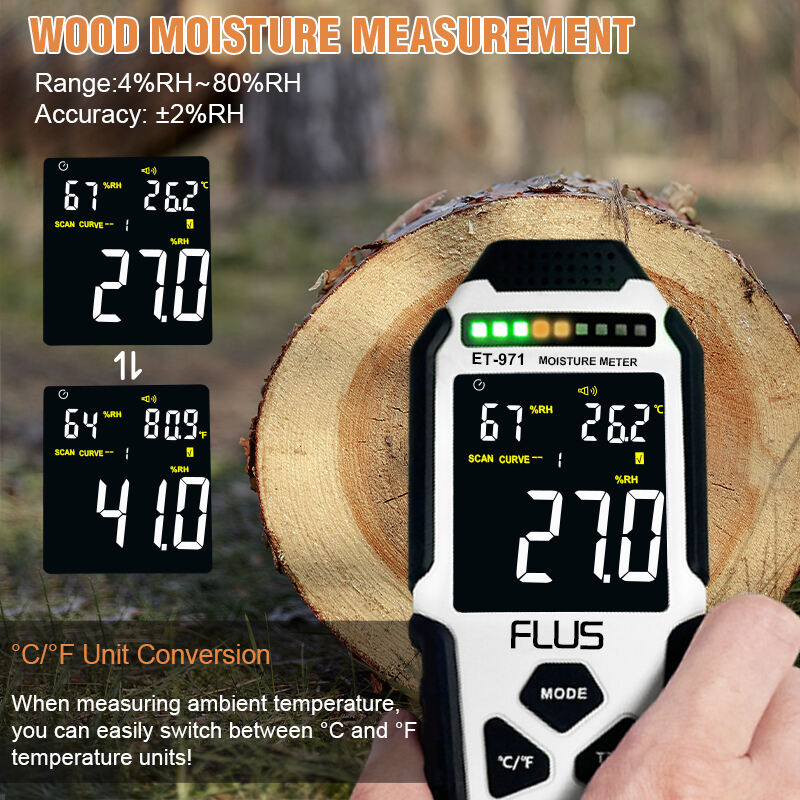
Understanding How Moisture Meters Work for Building Material Assessment
The science behind moisture detection in construction materials
Moisture meters work by detecting water content based on how moisture affects a material's electrical characteristics. Different building materials react to water in their own ways. Wood tends to swell when wet, whereas things like concrete and brick actually form salt deposits that hold onto moisture over time. These physical changes then impact how electricity flows through conductive substances and alters the dielectric properties of non-conductive ones. Take gypsum board for example. When water gets into it, the conductivity jumps around three times what it normally is, and the capacitance goes up somewhere between 15% to maybe 20%. This makes it possible for technicians to get accurate readings whether they're using traditional pin probes or those newer pinless models that scan from a distance.
How moisture meters measure conductivity and dielectric properties
Pin type meters work by placing two electrodes against the material to check electrical resistance between them. When testing dry lumber that's been through a kiln (around 8 to 12 percent moisture content), these meters usually register somewhere between 10 and 20 megaohms. But when wood gets damp with more than 20 percent moisture, readings plummet under one megaohm. Pinless models take a different approach altogether. They send out electromagnetic waves instead, looking at something called dielectric properties. Water happens to have this really high number around 80, so whenever there's moisture present, it stands out clearly on the meter display. Having both methods available means experts can check for moisture not just on the surface but deep inside too, all without leaving marks or damage on finished wood products.
The role of calibration in ensuring accurate moisture meter readings
Getting meters properly calibrated means matching their readings to what's normal for specific materials. Untreated pine just doesn't act the same as wet concrete when it comes to moisture levels, so the settings have to change accordingly. According to research from NIST back in 2022, meters that haven't been calibrated tend to give wildly off readings. They'll often say wood is much moister than it actually is (sometimes by as much as 40%) while claiming masonry has less moisture than reality shows. Smart technicians know this stuff matters. Before doing any important testing work, they take time to recalibrate against those reference samples provided by manufacturers. Following ASTM F2659 guidelines helps keep everything standardized across the board, which makes sense if we want trustworthy measurements from one job site to another.
Types of Moisture Meters and Their Applications in Construction
Pin-type vs. Pinless Moisture Meters: Differences and Applications
The pin type moisture meters work by sticking two little probes into stuff like wood or drywall to check how much electricity can pass through. They give pretty accurate readings right where they're placed, usually within about 6 to 10 percent accuracy, which makes them great when someone just needs to check one specific spot. But there's a catch they actually make tiny holes in whatever material they test. On the flip side, those pinless models send out electromagnetic signals that can penetrate around an inch and a half into surfaces. This means they work wonders on big flat areas that need checking without damaging them, think concrete foundations or solid hardwood flooring. The best part? These tools let technicians map out moisture levels quickly over large spaces without leaving any damage behind, something that's really handy during home inspections or building assessments.
Combination Meters With Dual Functionality
Combination meters integrate both pin and pinless modes, allowing cross-verification of results. Equipped with adjustable depth settings (0.25–2”) and material-specific calibrations for wood, concrete, and insulation, these advanced devices reduce false positives in complex scenarios—such as identifying trapped moisture behind tiles or within structural beams.
Choosing the Right Moisture Meter Based on Material Type and Project Scope
| Feature | Pin-Type | Pinless | Combination |
|---|---|---|---|
| Measurement Depth | Surface-level | Up to 1.5” | Adjustable (0.25–2”) |
| Material Compatibility | Wood, drywall | Concrete, dense wood | All common materials |
| Invasiveness | Minor surface damage | None | Optional |
| Best For | Spot checks, woodwork | Large surface scanning | Mixed-material projects |
Industry Trends in Smart Moisture Meters With Data Logging Capabilities
The latest generation of moisture meters comes packed with IoT features these days, from Bluetooth connections to cloud storage for all those readings. According to some industry numbers from last year, around two thirds of construction workers have started using these smart devices that automatically map out moisture levels and create compliance docs on their own. Most models can hold thousands of measurements in memory while running predictions to spot weird patterns before they become problems. This kind of tech really makes life easier when dealing with complex jobs that happen over time, whether it's installing new roofs or fixing foundations where conditions change day by day.
Preparing for Accurate Moisture Testing in Building Materials
Surface Preparation and Environmental Conditions Affecting Readings
Getting accurate test results starts with making sure the surface is properly prepared first. Any old paint, dust buildup, or leftover sealant needs to go because these contaminants can mess with readings quite a bit sometimes even changing them by around 35%. For best results, try to conduct tests when environmental conditions are fairly stable. The sweet spot tends to be somewhere between 15 and 25 degrees Celsius with relative humidity hanging around 40 to 60 percent. After heavy rain, masonry surfaces tend to hold onto extra moisture about 22% more than usual which means waiting at least two full days for things to dry out completely before doing any assessments. A recent study from Sinar UK back in 2024 confirmed this finding.
Identifying Material Types and Adjusting Moisture Meter Settings Accordingly
Material density and porosity influence moisture distribution patterns:
| Material Type | Recommended Meter Setting | Adjustment Factor |
|---|---|---|
| Softwood | Low-Density Mode | ±3% MC |
| Concrete | High-Density Mode | ±1.5% MC |
| Drywall | Medium-Density Mode | ±2% MC |
Moisture Content (MC)
A 2023 UK analysis of 500 construction projects found that 68% of testers neglect material-specific calibration, leading to misdiagnosed damp issues in one-third of cases. Always consult manufacturer guidelines when switching between materials like wood, plaster, or composites.
Safety Checks and Device Calibration Before Taking Measurements
Conduct three key pre-test checks:
- Battery check: Power levels below 4.5V distort pin-type meter readings
- Zero-point calibration: Use manufacturer-provided reference blocks monthly
- Depth validation: Ensure pinless scanning depth matches material thickness
Experts recommend dual calibration—first in controlled lab conditions, then on-site using known-dry samples. Field data indicates recalibrating every 50 readings maintains ±0.5% accuracy in concrete assessments.
Using Pin and Pinless Modes for Effective Damp Detection
Step-by-Step Guide to Using Pin Mode for Precise Moisture Penetration
Start with insulated pins when checking for moisture at certain depths in materials, usually around 1.5 inches deep for assessing structural integrity. Push those pins into the material so they run along the grain direction, making sure they actually touch what needs testing. It's important to take several measurements throughout the area being tested since this helps identify where moisture levels change. If there's more than a 5% difference between nearby spots, that typically means there's some dampness concentrated in one place. Don't forget to calibrate the meter first with a completely dry sample. This step helps adjust readings affected by things like salt buildup or changes in ambient temperature which can throw off results otherwise.
Advantages of Non-Invasive (Pinless) Mode for Large Surface Scanning
Pinless moisture meters work by sending out electromagnetic waves that can penetrate around three quarters of an inch into materials without leaving any marks behind. That makes these devices especially good when working on finished flooring or old plaster walls where damage just isn't an option. A recent report from the Building Materials Research Institute back in 2023 found something pretty interesting too. When looking at big areas such as basement floors, pinless testing actually completes measurements about ten times quicker compared to traditional pin methods. Getting the best readings requires keeping steady pressure while moving across the surface, and making sure the sensor stays fully in contact with flat spots that haven't been messed with. The tech side has gotten better over time too. New improvements in how these meters calibrate their electromagnetic fields means we're now seeing accuracy levels within plus or minus 2 percent for both wooden structures and concrete surfaces.
Comparing Accuracy, Depth, and Material Compatibility Between Modes
| Factor | Pin Mode | Pinless Mode |
|---|---|---|
| Depth Range | Up to 1.5" | Up to 0.75" |
| Material Suitability | Porous (wood, insulation) | Dense (concrete, tile) |
| Measurement Type | Absolute (% moisture content) | Relative (comparative scale) |
| Surface Damage | Minor puncture marks | None |
Pin mode delivers exact moisture percentages, while pinless mode preserves surface integrity—a decisive advantage in 78% of heritage restoration projects.
When Pinless Meters May Miss Subsurface Moisture: Limitations and Workarounds
Pinless scanners don't work so well on rough or multi-layered surfaces where water might be hiding under waterproof coatings. Some tests done last year found these devices missed around a fifth of hidden leaks behind stucco walls when compared against traditional pin probes. When there's reason to suspect problems, it makes sense to do things this way: start with a quick scan using the pinless setting first, then follow up any suspicious spots with actual pin tests. Most professionals will tell anyone who asks that double checking measurements becomes necessary once moisture levels go above about 15% in wooden materials or hit around 4% in concrete structures. Nobody wants false negatives after all.
Interpreting Moisture Meter Readings to Diagnose Common Building Damp Issues
Typical Moisture Content Thresholds for Wood, Concrete, and Plaster
Different materials used in construction handle moisture differently. For wood inside buildings, around 6 to 9 percent moisture content is considered normal. When it gets up to 15 or 20 percent, there's a good chance the wood will start rotting. Anything past 20 percent means serious problems are on the horizon and needs fixing right away. Concrete works best when kept under 4 percent moisture in most situations. Once it goes over 5 percent, cracks might appear and the whole structure could become unstable over time. Plaster walls need special attention too since they shouldn't have more than 1 percent moisture. Even going past 2 percent can lead to those ugly bubbles forming on the surface or worse yet, mold starting to grow behind the wall.
Pattern Recognition: Distinguishing Rising Damp from Condensation Using Scan Gradients
When we see moisture levels drop gradually from the ground up toward the ceiling, this usually points to rising damp caused by water moving through tiny cracks in walls. Recent research looking at old stone buildings showed something similar back in 2023. They measured around 18 to 25 percent moisture right at floor level, then it dropped off pretty quickly to about 8 to 12 percent just one meter up from the ground. These numbers make sense if groundwater is actually seeping into the building. Condensation works differently though. It tends to create random spots of high moisture near windows or where there's a cold bridge effect. The difference between dry and wet areas is much more sudden when scanning for condensation problems compared to the gradual changes seen with rising damp.
Correlating High Readings with Potential Salt Contamination in Masonry
Elevated moisture readings in brick or stone (15%+) may stem from hygroscopic salt deposits rather than active leaks. These salts absorb atmospheric humidity, creating false positives. In such cases, pairing infrared thermography with invasive pin testing helps differentiate salt-induced readings from true damp penetration.
Case Study: Diagnosing Wall Dampness in a Historic UK Building Using Dual-Mode Meters
The old 1800s courthouse in downtown Manchester continued to battle stubborn wall stains even after multiple waterproofing attempts. When investigators used pinless scanning technology, they found a moisture band about 40 centimeters wide climbing up from the base of the building, measuring between 12% and 18% humidity levels. Traditional pin probes also picked up alarming salt concentrations in the mortar joints exceeding 3,500 parts per million. These combined findings pointed clearly to rising damp problems made worse by salt migrating through the walls from road de-icing treatments. Based on this evidence, conservationists decided on a two-pronged fix: applying new plaster made with lime-based materials and setting up a chemical damp-proof barrier to stop further water intrusion.
Frequently Asked Questions
What is a moisture meter used for in construction?
A moisture meter is used in construction to measure the water content in building materials. It helps identify areas of dampness, assess structural integrity, and prevent potential damage caused by excess moisture.
How do pin-type moisture meters differ from pinless models?
Pin-type moisture meters use two electrodes inserted into materials to measure electrical resistance, offering specific spot readings. Pinless models, on the other hand, utilize electromagnetic waves to measure moisture without causing surface damage, making them suitable for scanning larger areas.
Why is calibration important for moisture meters?
Calibration ensures that moisture meters provide accurate readings for specific materials. Without proper calibration, the meters can give misleading results, which may lead to incorrect assessments of material moisture content.
What are the best practices for preparing surfaces before moisture testing?
For accurate moisture test results, ensure surfaces are free of contaminants like dust, paint, or sealants. Stabilize environmental conditions like temperature and humidity and wait for adequate drying time after rain for optimal readings.
How can one interpret moisture readings in construction materials?
Interpretation involves understanding typical moisture thresholds for different materials. For instance, wood should ideally have 6-9% moisture content, while concrete should stay below 4%. Higher readings can indicate issues like rotting or instability.
Table of Contents
- Understanding How Moisture Meters Work for Building Material Assessment
- Types of Moisture Meters and Their Applications in Construction
- Preparing for Accurate Moisture Testing in Building Materials
- Using Pin and Pinless Modes for Effective Damp Detection
-
Interpreting Moisture Meter Readings to Diagnose Common Building Damp Issues
- Typical Moisture Content Thresholds for Wood, Concrete, and Plaster
- Pattern Recognition: Distinguishing Rising Damp from Condensation Using Scan Gradients
- Correlating High Readings with Potential Salt Contamination in Masonry
- Case Study: Diagnosing Wall Dampness in a Historic UK Building Using Dual-Mode Meters
-
Frequently Asked Questions
- What is a moisture meter used for in construction?
- How do pin-type moisture meters differ from pinless models?
- Why is calibration important for moisture meters?
- What are the best practices for preparing surfaces before moisture testing?
- How can one interpret moisture readings in construction materials?